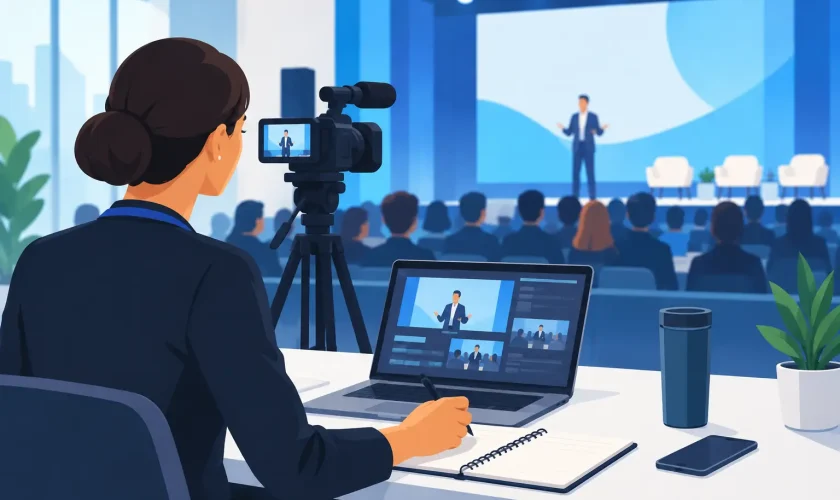

A full ballroom. A keynote speaker steps into the light. The audience is engaged, sponsors are visible, and your team is capturing the images that will market next year’s event. Then someone asks: do attendees need photo releases before those photos can be used?
The answer is rarely a simple yes or no. For corporate events, the right approach depends on where the event takes place, who is being photographed, how the images will be used, and what attendees were told before they arrived. A smart release and notice process protects the content plan without turning registration into a legal obstacle course.
Do Attendees Need Photo Releases for Corporate Events?
Often, an individual signed photo release is not required for every person who appears incidentally in event coverage. A clearly communicated photography and video notice may be sufficient for many conferences, trade shows, meetings, and brand activations, particularly when images show the overall atmosphere of a public or ticketed event.
But “may be sufficient” is not the same as “always sufficient.” Rules around privacy, publicity rights, biometric data, and commercial use vary by state and circumstance. Your event’s terms, venue agreement, registration process, and intended content use all matter. Legal counsel should review the approach for your specific event, especially if the content will support paid advertising, a national campaign, or long-term brand use.
The practical distinction is this: wide shots of attendees networking or watching a session are different from a tightly framed portrait used to promote a product months later. The closer an image ties a recognizable person to a commercial message, the stronger the case for clear, documented consent.
The Difference Between Notice and a Photo Release
A photography notice tells attendees that photography and video recording will occur and that their attendance may result in their likeness being captured. It is typically included in registration terms, confirmation emails, event websites, signage, and badges where appropriate.
A photo release is more specific. It generally asks a person to grant permission for use of their likeness and may describe the channels, duration, territory, and types of promotion covered. Releases are particularly useful when a person is featured prominently, interviewed on camera, photographed for a sponsor campaign, or participating in a controlled brand activation.
For large corporate events, the best process is often layered. Registration language establishes expectations early. Visible on-site signage reinforces the notice. A production team identifies situations that require individual releases and collects them before a featured portrait, testimonial, or filmed interview is used.
That system supports both the guest experience and the content strategy. It avoids chasing signatures from hundreds of people who happen to appear in a ballroom image while protecting the footage and photographs with the highest marketing value.
When Individual Releases Are the Safer Choice
There are moments when relying on general event notice creates unnecessary risk. Individual releases are the more disciplined option when the person will be a recognizable subject rather than part of the crowd.
This is especially true for executive interviews, attendee testimonials, customer success stories, branded social campaigns, and sponsored content. It also applies when a photographer or videographer directs someone into a posed shot intended for future marketing. If the person is effectively becoming talent for the brand, treat the approval process accordingly.
Consider releases carefully for these situations:
- A close-up attendee image will be used in paid ads, print campaigns, or major website promotion.
- A sponsor wants a specific attendee featured in its post-event marketing.
- A guest provides a filmed testimonial, interview, or product reaction.
- The event includes minors, influencers, celebrities, or speakers whose agreements may contain separate image-use terms.
- The audience includes employees, customers, or guests from industries with heightened confidentiality concerns, such as healthcare, financial services, government, or defense.
A speaker agreement is another common gap. Event organizers may have permission to record a presentation, but that does not automatically answer every question about using the speaker’s likeness in promotional edits, paid media, or sponsor deliverables. Address recording and usage rights in the speaker agreement before the event, not during final delivery.
Build Consent Into the Event Journey
The best photo-release process begins before the first camera is unpacked. Attendees should know what to expect during registration, and the language should be easy to find and easy to understand. Dense legal copy hidden at the bottom of a form does little to manage expectations on site.
Your registration terms can state that photography and video recording will take place, describe the general promotional and archival purposes, and explain how attendees can raise concerns. Confirmation emails can reinforce that message. At the event, place clear signs at entrances, registration, high-traffic activation areas, and any filming locations.
For a simple notice, clarity beats drama. Tell people that the event is being photographed and filmed, that their likeness may appear in event-related content, and where they can ask questions or request reasonable accommodations. If you offer a no-photo option, make sure the process is operationally realistic. A colored badge, discreet identifier, or guest-services workflow only works if event staff and the production team know how to recognize and honor it.
There is a trade-off. A highly restrictive system can make candid coverage difficult and create confusion for guests. A vague system can leave your team with content it hesitates to use. The goal is a process proportionate to the event’s size, audience, and distribution plan.
Plan for Sensitive Spaces and Sensitive Content
Not every area of a corporate event should be filmed the same way. A general session may be designed for broad coverage. A private executive dinner, confidential product demonstration, medical education session, or partner meeting may require a camera-free boundary.
Map those decisions during pre-event planning. Identify rooms, sessions, attendees, and moments that should not be photographed. Share the plan with producers, photographers, videographers, venue teams, and event leads. A clear shot list should include what to capture and what to avoid.
This matters for sponsor value as well. Sponsors want visible, usable proof of participation, but they do not want accidental footage of confidential screens, competitor materials, or private conversations. Well-managed event coverage creates polished sponsor assets without compromising the environment around them.
For trade shows and large conferences, establish a practical rule for exhibitor booths. If a booth contains proprietary demonstrations or restricted material, clarify whether it is open to general event coverage, sponsor-only coverage, or no coverage at all. A five-minute conversation before doors open can prevent hours of unusable footage later.
Give the Production Team a Clear Role
Your photography and video crew should not be expected to interpret legal policy in real time. They need a concise brief: where they can shoot, what sessions are restricted, who has authority to approve exceptions, how releases are collected, and how guests can be directed to the right event contact.
An experienced event media team can also help separate content into useful categories from the start. Wide environment images, candid networking photos, sponsor moments, speaker coverage, testimonials, and social-first video do not all carry the same approval considerations. Organizing them early makes post-event review faster and more confident.
At AXIA Event Media, this planning is part of protecting the final deliverable. Fast selects and next-day photography are valuable only if the marketing team knows which images are ready to publish. A defined release process helps teams move quickly without guessing.
Do Not Confuse a Release With Copyright Ownership
A photo release addresses permission to use a person’s likeness. It does not automatically determine who owns the photograph or video. Copyright and usage rights are governed by the agreement with your photographer, videographer, or production partner.
Your event media agreement should clearly state what the organization receives: usage rights, delivery timelines, editing scope, file access, and any limits on sponsor or third-party use. If multiple sponsors will need images after the event, decide whether those rights are included or require separate permissions.
This is where many event teams lose time. They have beautiful content but no clear process for distribution. Clarifying both likeness permissions and media usage rights before the event gives marketing teams an organized library they can use with confidence.
A Better Standard Than “We’ll Handle It Later”
Photo releases are not just a legal checkbox. They are part of producing an event with control, respect, and a clear plan for how its story will travel after the room empties.
Build notice into registration. Use individual releases for featured people and higher-stakes commercial uses. Mark restricted spaces. Brief the crew. Have qualified legal counsel review the language and process that fit your event.
When cameras start rolling, the strongest event teams are not improvising consent. They are focused on capturing the moments that deserve to be seen.