
A full ballroom, a major keynote, a packed sponsor floor – and no usable image of the moment that mattered most. That is the pressure behind every event media plan. To prevent event media gaps, coverage has to be designed before crews arrive, not improvised from a run of show once doors open.
For corporate events, missed coverage is rarely just a creative disappointment. It can mean an unfulfilled sponsor commitment, a launch moment with no social-ready asset, an executive appearance without a polished record, or an event recap that feels incomplete. The strongest event content does more than look good. It proves the value of the experience to attendees, partners, leadership, and next year’s prospects.
Why Event Media Gaps Happen
Most gaps are not caused by a lack of effort. They happen when media coverage is treated as one broad assignment: capture the event. That direction leaves too much open to interpretation when multiple stages, activations, VIPs, and sponsor obligations compete for attention.
A photographer may be on the trade show floor when the CEO enters the general session. A video operator may be capturing a powerful testimonial while a sponsor activation reaches its peak. Neither team made the wrong decision. The plan simply did not establish coverage priorities, backup positions, or a clear handoff between photo and video.
Complex schedules create another common problem. Agendas shift. Speakers run long. A product reveal moves 20 minutes earlier. A client dinner adds an unscheduled awards presentation. If the media team does not receive updates in real time, even an experienced crew can miss a critical beat.
Then there is the content gap. An event may be beautifully documented but still fail to produce the assets marketing needs: vertical video for social channels, clean sponsor signage, executive portraits, attendee reactions, wide establishing shots, or a fast set of priority selects for the next morning. Coverage is not complete until it serves the intended use.
Prevent Event Media Gaps With a Coverage Map
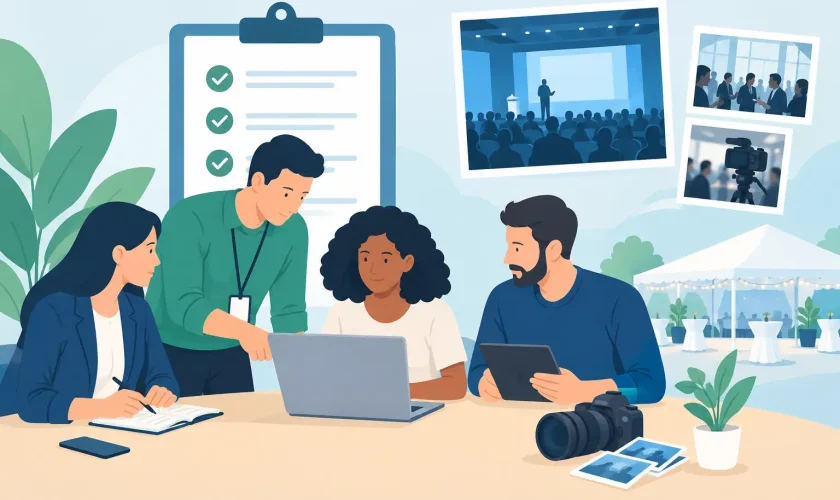
The most reliable protection is a detailed coverage map built around moments, people, places, and deliverables. It is more useful than a simple shot list because it connects each priority to a time, location, owner, and purpose.
Start with the event’s non-negotiable moments. These are the scenes that cannot be recreated: opening remarks, ribbon cuttings, keynote entrances, awards, product reveals, sponsor recognition, executive interactions, and headline entertainment. Each needs a clear coverage plan, including where the photographer and video team will be positioned and what type of asset is required.
Next, identify the supporting material that gives the final gallery and event film depth. This includes branded environmental details, registration, venue exteriors, signage, networking, candid attendee energy, breakout sessions, food and beverage, and behind-the-scenes preparation. These images make the event feel complete, but they should not pull the team away from priority moments.
A useful coverage map also accounts for simultaneous programming. If a breakout, sponsor activation, and VIP arrival happen at the same time, the answer is not to hope one person can move quickly enough. Assign coverage in advance or decide which moment takes priority. That decision is much easier before the show floor opens.
Build Around Deliverables, Not Just Moments
Ask what the content needs to do after the event. A cinematic recap film requires different footage than a same-day social post. Sponsor reporting may require wide shots that show foot traffic, branded signage, and meaningful attendee engagement. A future-event campaign needs scale, energy, and moments that make prospective attendees want to be in the room.
When deliverables are defined early, the crew can capture with purpose. Video teams know when to prioritize interviews, natural sound, vertical clips, or b-roll. Photography teams know which speakers, signage, sponsor elements, and attendee profiles need dedicated attention.
This is also where brand standards belong. Share approved logos, brand colors, visual references, messaging priorities, and any restrictions around attendees or presenters. A premium event gallery should look like an extension of the brand, not a disconnected collection of attractive images.
Treat Photo and Video as One Production Plan
Hiring separate vendors can work for a simple event. At a major conference or brand activation, it often creates blind spots. Each vendor has its own priorities, schedule interpretation, and communication flow. The planner becomes the person trying to coordinate the gaps in real time.
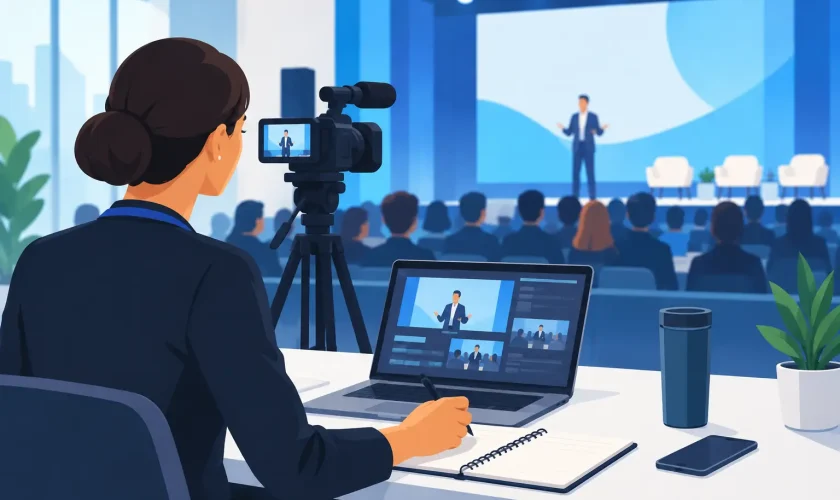
A unified photo and video team works from one plan. Teams can coordinate positions during high-value moments, avoid blocking each other’s angles, and share live schedule updates. More importantly, they can make smart decisions when the event changes. If video needs clean audio from the keynote, photography can cover audience reactions and stage details. If a sponsor moment is moving quickly, the right crew member can be dispatched without debate.
This does not mean every event needs a large crew. A focused executive meeting may need a lean team. A multi-day conference with concurrent programming, sponsor commitments, and multiple content deliverables may need photographers, videographers, producers, and editors working as one unit. The right scale depends on the schedule and the cost of missing a moment.
Create a Live Communication System
The run of show is a starting point, not a guarantee. Build a communication system that keeps the media team connected to the people making real-time event decisions.
Assign one client-side point person who can flag agenda changes, VIP arrivals, speaker substitutions, and unplanned moments. That person should be able to reach the production lead directly. The media lead should also know who is managing each major area: general session, sponsor floor, breakouts, executive programming, and evening events.
Before the event, walk the venue together when possible. Identify stage access, sightlines, lighting challenges, loading routes, restricted areas, and the fastest path between locations. A crew that knows the room can respond with confidence when timing changes.
Briefings should be concise but specific. The team needs the latest agenda, key names and faces, sponsor obligations, priority moments, brand guidance, and delivery expectations. They do not need pages of broad creative language that cannot be acted on in the field.
Protect the Moments That Move Fast
Some of the most valuable content happens outside the formal agenda. A product leader greeting customers. A full sponsor activation. A candid conversation between executives. A spontaneous audience reaction after a major announcement. These moments are difficult to schedule, but they can be anticipated.
Place crews where energy is likely to build. Schedule short check-ins throughout the day so coverage can shift toward the busiest activations, strongest networking periods, or unexpected VIP opportunities. An experienced team watches the room instead of waiting for the next calendar item.
At the same time, avoid chasing every possibility. Too much movement can create its own gaps. The goal is disciplined flexibility: protect the must-have moments, then use available coverage to capture the scenes that make the event feel alive.
Plan for Fast Delivery While the Event Still Matters
A gap can occur after the cameras stop rolling. If content arrives weeks later in one unorganized folder, the marketing team loses the chance to use it when attention is highest.
Define a delivery rhythm before the event. For many conferences, same-day priority selects support social posting, internal updates, and executive communications. Next-day photography gives marketing teams polished assets while the experience is still fresh. Video timing depends on the edit scope, but priority social clips and a clear recap-film schedule prevent uncertainty.
Organization matters just as much as speed. Galleries should be easy to navigate by day, event area, sponsor, session, or content type when needed. Marketing teams should not have to search through thousands of files to find one usable keynote image or a sponsor-ready set of activation photos.
AXIA Event Media plans coverage around those real-world needs: one coordinated photo and video team, clear priorities, premium visual storytelling, and organized delivery built for marketing use.
Make the Pre-Event Conversation Specific
The best question is not, “What kind of coverage do you want?” Ask, “What would make you disappointed if it were missing?” That answer reveals the moments, people, and assets that deserve protection.
Bring the event marketing lead, producer, sponsor team, and executive stakeholders into that conversation early. Their priorities may differ, and that is normal. The coverage plan should make those trade-offs visible before event day, when there is still time to staff appropriately and set realistic expectations.
The camera team cannot rewind a keynote entrance or recreate a crowded show floor. But with a clear coverage map, coordinated crews, live communication, and fast delivery expectations, your event has a far better chance of leaving behind the complete, usable story your team worked hard to create.