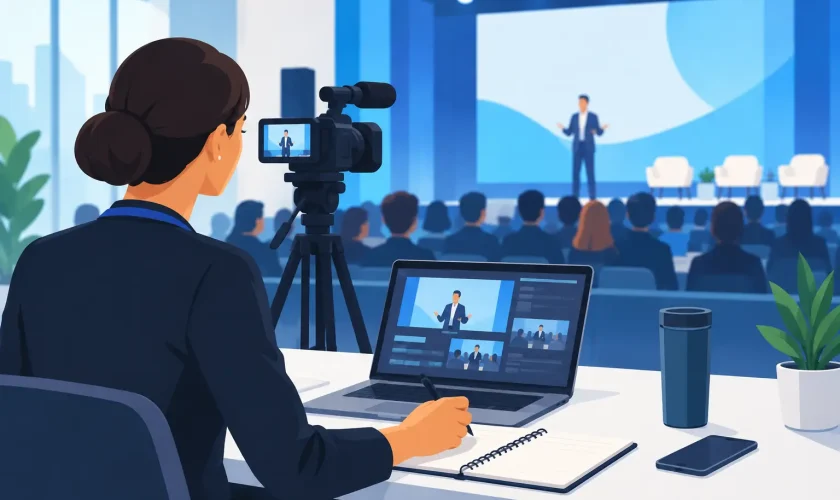

A keynote film can become a launch asset. A crowd-reaction clip can power social posts for months. A sponsor interview can support a renewal conversation. But none of that value is guaranteed simply because your event team paid for video coverage. This guide to event video licensing explains what your organization can actually do with the footage after the ballroom clears.
For corporate events, licensing is not a legal detail to address at the end of production. It is part of content planning. The rights in your agreement determine whether your team can edit clips, distribute them to sponsors, run paid ads, build a content library, or hand footage to another agency next quarter.
What event video licensing really covers
Event video licensing defines the permitted use of video created at your event. It answers practical questions: Who owns the final files? Where may they appear? Can the footage be edited later? Can sponsors use it? Does the right to use it expire?
Many event video agreements separate copyright ownership from usage rights. A production company may retain copyright while granting the client a broad license to use the delivered content. That arrangement can work well when the license is clear, durable, and broad enough for your marketing plans.
The problem begins when the agreement uses vague language such as “promotional use” or “digital use” without defining what those terms include. Your event footage may need to appear on websites, social channels, email campaigns, sales presentations, internal communications, paid media, recruitment materials, and future event promotion. A narrow license can turn a useful asset into a file your team is hesitant to use.
For most corporate event teams, the goal is simple: secure rights that match the full commercial and marketing value of the event, not only the recap video planned for next week.
Start with how the content will be used
The right license depends on the event and the audience. A private leadership meeting has different requirements than a national user conference or a public-facing product launch. Before requesting a proposal, identify the likely uses for the footage over the next one to three years.
Consider whether your team needs content for organic social media, paid advertising, websites, event registration campaigns, internal communications, sales enablement, recruiting, investor relations, broadcast, or out-of-home displays. If the answer is “possibly,” address it now. Expanding rights after delivery can create delays, added fees, and unnecessary approval rounds.
Sponsor use deserves its own conversation. Sponsors often expect assets that demonstrate their presence, show booth traffic, or capture a speaking session. Your organization may want to provide those clips as part of a sponsorship package. If so, the production agreement should allow you to share approved content with named sponsors or partners for agreed-upon promotion.
That does not mean every sponsor should receive unlimited rights to every frame. A practical approach is to define the materials they can use, the channels permitted, whether edits are allowed, and the approved timeframe. This protects your brand while giving sponsorship teams a tangible post-event deliverable.
The rights to define in your agreement
A strong event video license is specific without becoming difficult to manage. The following points should be addressed before cameras arrive.
Usage channels and territory
Confirm where the footage can be used: owned websites, social platforms, email, presentations, streaming channels, paid campaigns, and internal platforms. If your event is national or global, avoid a territory limitation that does not reflect your actual audience.
Also clarify whether paid media is included. Organic posting and paid advertising are often treated differently. A clip that works beautifully as a registration ad is far more valuable when your team can promote it without requesting a separate license.
Duration of use
Perpetual rights allow your organization to continue using approved footage without an expiration date. This is often the cleanest choice for brand films, evergreen testimonials, executive content, and footage likely to enter a long-term content library.
A term-based license can make sense for a one-time campaign or a lower-budget project, but it creates a future administrative task. If your team keeps assets active after the license expires, it may need to pull content from web pages, presentations, and ads quickly. Know who is responsible for tracking that date.
Editing and derivative rights
Your marketing team should be able to resize, trim, caption, re-cut, combine, and adapt delivered footage for future formats. This is sometimes called the right to create derivative works. Without it, a 16:9 event film may be usable as delivered but unavailable for vertical social edits, new campaign messaging, or a shortened sponsor version.
The agreement should also state whether internal teams, agencies, and other approved vendors may make those edits. Corporate content rarely lives with one team forever. Giving your organization the ability to work with future creative partners keeps the footage useful.
Transfer and third-party use
Event content often moves between departments, agencies, regional offices, sponsors, and speakers. Determine whether the license is transferable or sublicensable to approved partners. If your company works through an agency, confirm that both the agency and the end client have the needed rights.
This matters especially for DMCs and experiential agencies. They may manage production, but the brand funding the event needs clear rights to use the finished work after the engagement ends.
Deliverables, project files, and raw footage
A license for final videos is not automatically a license for raw footage, project files, or source audio. These are separate deliverables and should be named separately.
Raw footage can be valuable for future edits, archival needs, executive requests, and unplanned campaigns. It can also be large, unorganized, and difficult to use without careful labeling. If you need it, specify the delivery format, file organization, storage period, and whether it includes all camera angles and audio sources.
Project files are even more specialized. They can help another editor continue a campaign, but they may depend on proprietary templates, licensed music, graphics, fonts, or software versions. In many cases, an organized library of high-resolution final exports, selects, and raw footage provides more practical long-term value than project files alone.
Licensing is only part of the clearance picture
Even broad rights from your video team do not override the rights of everyone and everything captured on camera. Event planners should consider music, speakers, attendees, performers, venues, branded displays, and third-party media.
Music requires commercial clearance
A popular song playing during a walk-on may sound great in the room but can create problems when the video is posted online or used in an ad. Social platforms may mute, block, or limit the video. Paid usage can create greater exposure.
Ask whether the production includes properly licensed music for the intended distribution channels and term. Stock music licenses vary. A track cleared for an organic social post may not be cleared for a paid campaign, broadcast placement, or perpetual use. Custom music can offer more control, but it comes with a higher cost and should still be documented.
Speakers, attendees, and talent
For a keynote or panel, confirm that speaker agreements allow recording and promotional use. This is particularly important when presentations include confidential product details, client information, or third-party intellectual property.
For attendees, event registration terms and visible onsite signage can establish notice that photography and video are taking place. But broad event notice is not a substitute for thoughtful review in every situation. High-profile guests, minors, employees, customers, or people featured prominently in a paid campaign may require more specific releases.
Screens, slides, and venue restrictions
A camera can capture material that your team does not own. Presentation slides may contain licensed images, customer logos, software demos, or video clips with limited rights. A venue may also have restrictions on commercial filming, exterior shots, drones, or branded architectural elements.
Build a clearance review into pre-event planning. Identify sessions that should not be recorded, slides that should not be shown in the recap, and areas where cameras should not shoot. It is far easier to redirect a crew than to remove a key moment from an edit later.
Build licensing into the production brief
The strongest licensing plan begins with a clear brief. Tell your video partner how the content will be used, which stakeholders need access, what sponsors expect, and how quickly assets must be delivered. This shapes crew coverage, interview releases, music choices, shot lists, edit structure, and file organization.
For example, if sponsor clips are a priority, capture branded signage, booth interactions, demonstrations, and approved attendee reactions with that deliverable in mind. If next year’s registration campaign is the goal, plan for strong venue reveals, speaker energy, proof of attendance, and clean brand moments that will remain relevant after this year’s dates and messaging change.
Your agreement should also identify who has final approval. Marketing, legal, communications, sponsor teams, and executive stakeholders often have different concerns. One approval owner and a defined review process protect turnaround time while keeping content on brand.
Questions to ask before signing
Ask the production partner to state, in plain language, whether your organization can use the delivered footage worldwide, across owned and paid channels, for a defined term or in perpetuity. Confirm whether your team and approved agencies may edit the assets, whether sponsors can use designated clips, and what is included beyond final videos.
Then ask what has been cleared. Does the music license cover your planned use? Are speaker and attendee releases part of the process? How long will raw footage be retained? Are there restrictions on footage that includes screens, performers, or venue features?
If the event carries significant regulatory, celebrity, broadcast, or international considerations, bring legal counsel into the review. Production teams can explain their licensing structure and clearance workflow, while your counsel can assess the risks specific to your organization and campaign.
A premium event film should keep working long after the final applause. Clear rights, organized deliverables, and a production partner that plans for real marketing use give your team the confidence to put every strong frame to work.