
A packed keynote room, a major product reveal, a sponsor activation with a line around the block – these moments have a short shelf life unless they are captured with purpose. Essential event media deliverables turn a live experience into organized assets your marketing team can use long after the final session ends.
For corporate events, the question is not simply whether to hire a photographer or videographer. The real question is what the content needs to accomplish. It may need to drive next year’s registration campaign, give sponsors visible proof of value, support executive communications, fuel social channels, or document a brand experience that took months to build.
The strongest media plan starts with deliverables, not cameras. When the output is clear before the event begins, the crew knows what to prioritize, stakeholders know what to expect, and no one is left sorting through thousands of files without a plan.
Start With the Moments That Cannot Be Repeated
Every event has moments that happen once: a CEO walking onstage, a ribbon cut, a customer reaction during a live demo, a surprise announcement, or a room reaching capacity before a featured speaker. These are not interchangeable shots. Missing one can leave a gap in the event story that cannot be recreated later.
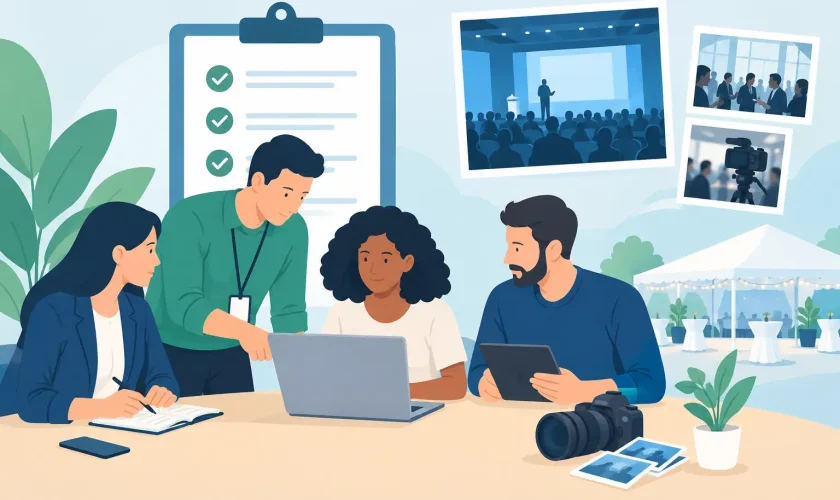
Before coverage begins, identify the moments that carry the most brand, business, and emotional value. Build them into a production brief with session times, speaker names, sponsor commitments, activation details, VIP attendees, brand guidelines, and approval contacts. A well-built brief gives the media team direction while still leaving room to capture the candid interactions that make an event feel alive.
This is especially important for conferences and trade shows with simultaneous programming. One photographer cannot cover a keynote, breakout session, sponsor lounge, and off-site reception at the same time. Crew size should reflect the schedule, footprint, and number of priority moments, not just total attendance.
Essential Event Media Deliverables to Plan For
The exact mix depends on your goals, but most large corporate events benefit from a defined collection of photography and video assets. These deliverables give marketing teams both immediate content and a useful library for future campaigns.
- Same-day priority photo selects for social posts, executive updates, press needs, and attendee excitement while the event is still happening.
- A next-day edited photo gallery organized by day, session, activation, sponsor, or other categories that make images easy to find and share.
- A cinematic event highlight film that captures the energy, scale, key messages, and strongest visual moments of the full experience.
- Short-form vertical video clips built for social channels, including speaker soundbites, attendee reactions, product moments, and activation highlights.
- Sponsor and partner coverage that clearly shows signage, engagement, branded environments, and meaningful guest interaction.
- Speaker and executive content including stage photography, presentation details, audience response, and polished interview footage when appropriate.
These are not simply files at the end of a production. Each one serves a different audience and deadline. A social team needs selects now. Sponsors need proof that their investment was visible and active. A marketing team needs polished content that can promote the next event months later.
Photography That Shows More Than Attendance
Event photography should demonstrate scale, energy, and intent. A wide shot of a packed ballroom establishes turnout. A close portrait of an engaged attendee makes the experience human. Clean images of signage, stage design, products, and branded details show the care behind the production.
The goal is range without repetition. A gallery filled with similar stage shots may document who spoke, but it does not tell the full story. Strong event photography includes the room, the people, the details, the sponsor presence, the candid connections, and the big visual moments that define the experience.
Organization matters just as much as image quality. Marketing teams should receive edited images in a gallery that is simple to navigate, not a generic file dump. Clear folders for keynote sessions, breakouts, receptions, activations, and sponsors can save hours when a team needs a specific image for a post-event recap, sales deck, or registration page.
Fast delivery has real value here. Next-day photography allows a team to maintain momentum while attendees are still sharing their experience. For multi-day events, same-day priority selects can keep the event’s social presence current rather than forcing the team to rely on phone content alone.
Video Should Be Built for Multiple Uses
One event film is valuable, but it should not be the only video deliverable. A polished highlight film can communicate the feeling of the event in one or two minutes. It is ideal for a recap page, future promotion, internal presentations, and sales conversations. It is not always the right format for a LinkedIn post, a sponsor recap, or a short paid social campaign.
That is why short-form edits should be planned from the start. Vertical clips require different framing and pacing than a widescreen event film. Interview soundbites require a clear question strategy. A product launch may need a sharper focus on the reveal, while a leadership summit may need more executive messaging and attendee perspective.
There is a trade-off. Capturing more formats requires more intentional production on site. If your event needs interviews, the crew needs a controlled location, a schedule, and approved spokespeople. If vertical social content is a priority, the team needs to film for that format rather than attempting to crop every shot later. The best results come from matching the production approach to the final use.
Give Sponsors Content They Can Recognize and Use
Sponsors are not looking for a distant photo of their logo. They want clear evidence of presence, engagement, and association with a well-produced event. That means capturing branded signage in context, attendees participating in an activation, meaningful staff interactions, and the overall environment around the sponsor experience.
Sponsor deliverables can also reduce pressure on internal teams. Rather than asking staff to chase photos during a busy event, establish the required sponsor coverage in advance. Confirm which partners need dedicated image sets, which activations require video, and whether any sponsor assets need priority delivery.
Be realistic about visibility. A sponsor with a booth in a low-traffic area cannot be made to look like the centerpiece of the conference through editing alone. But thoughtful coverage can highlight its best moments, strongest engagement, and polished brand presence without overstating the result.
Build a Content Library, Not a One-Time Recap
An event lasts a few days. Its media should work for much longer. The right content library supports registration campaigns, sponsor sales, recruiting, internal communications, product marketing, and future creative planning.
This requires more than saving final photos and a highlight film in one folder. Think about how your team will search for content six months from now. Will they be able to find an image of a specific speaker? A crowded networking reception? A product demonstration? A diverse audience in a workshop? A sponsor activation from a particular year?
Metadata, logical folders, consistent file naming, and clear usage terms all make content more useful. They are not glamorous production details, but they determine whether the work becomes a genuine marketing asset or disappears into an archive.
For recurring events, a consistent visual approach also strengthens the brand. The content should evolve with each year’s creative direction, but the level of polish, color treatment, composition, and storytelling should feel connected. That consistency helps audiences recognize the event before they read a single word.
Choose One Team That Can See the Whole Event
Managing separate photo and video vendors can create avoidable friction. Coverage overlaps, priorities compete, and the client becomes the person responsible for coordinating both teams in the middle of an event.
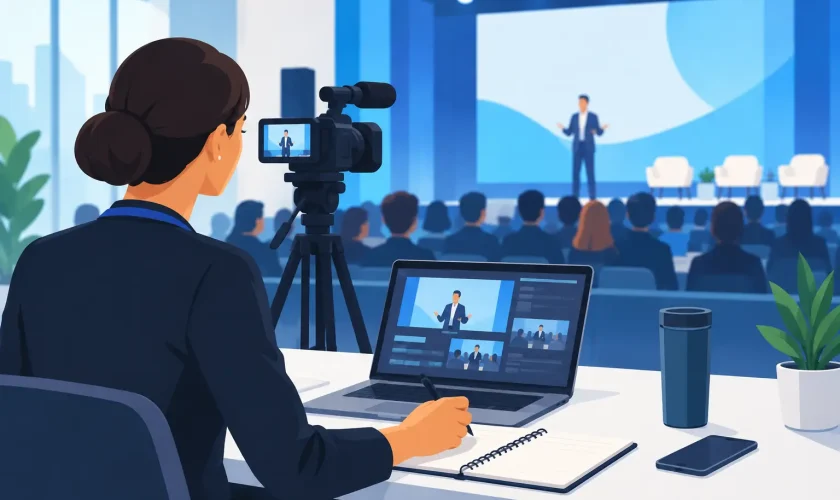
A unified photo and video team works from the same schedule, creative brief, brand standards, and priority list. The photographer knows when a video interview is happening. The video crew understands which sponsor moment needs still coverage. Producers can shift resources as the day changes without creating confusion across vendors.
That coordination becomes more valuable as events become larger and more complex. A nationwide team such as AXIA Event Media can scale crews for concurrent sessions, multi-day schedules, and large venue footprints while maintaining one point of accountability for the final content.
Set Delivery Expectations Before the Event
Fast turnaround should be specific. Ask when priority selects will arrive, when the full gallery will be available, how the event film timeline is structured, and what rounds of feedback are included. “Quick delivery” means different things to different vendors. Clear deadlines prevent disappointment after the event.
Also define who can request changes and who gives final approval. A simple approval path protects the timeline, especially when marketing, leadership, sponsors, and agencies all have opinions about the final work.
The best event media deliverables do more than prove an event happened. They give your team material to publish while the room is still buzzing, evidence sponsors can bring back to their leadership, and a visual record worth returning to when the next event begins. Plan those outcomes early, and every captured frame has a stronger job to do.
Comments(02)