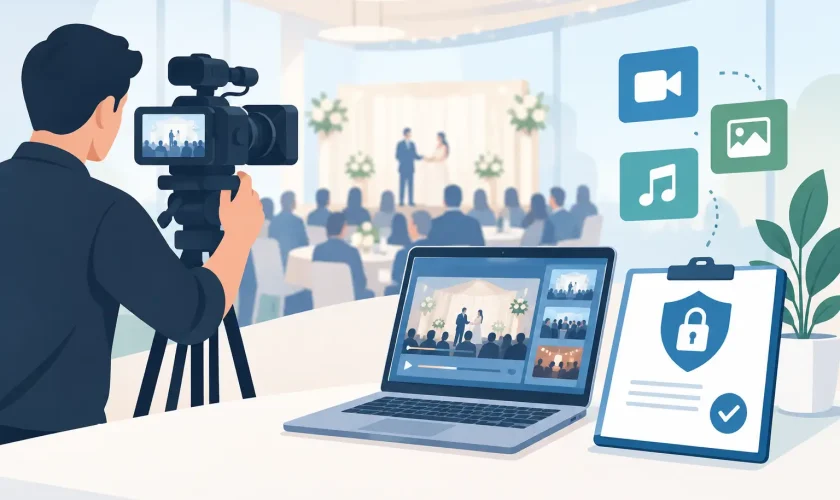

A keynote ends to applause. A sponsor’s activation is packed. An executive is meeting with a customer who could become a major account. Those moments move quickly, and the wrong conference content vendors can leave you with gaps, inconsistent visuals, and files that arrive after the momentum is gone.
For conference organizers and corporate marketing teams, event coverage is not a last-minute production task. It is a brand asset, a sponsor deliverable, a social media engine, and the visual record of months of planning. The vendor you choose needs to do more than operate a camera. They need to understand the run of show, anticipate what matters, work within brand standards, and deliver usable content at the speed your event demands.
What Conference Content Vendors Are Really Responsible For
A strong event content partner captures more than stage photos and a recap video. They document the full experience: keynote speakers, audience response, networking, branded details, sponsor moments, breakout sessions, executive interactions, product demonstrations, and the energy between scheduled programming.
That breadth matters because every stakeholder sees the event differently. Your marketing team needs polished images for campaigns. Social teams need priority selects while the event is still active. Sponsors need visible proof of their investment. Leadership needs content that reflects the quality and scale of the organization. Future attendees need a reason to register next year.
The work becomes more complex when photography and video are split across separate vendors. Different teams may follow different creative direction, prioritize different moments, and compete for access in the same room. A unified photo and video team creates a more consistent visual story and gives planners one point of contact before, during, and after the event.
How to Evaluate Conference Content Vendors
The best choice is rarely the vendor with the largest gallery or the lowest quote. It is the team with the planning discipline, creative judgment, staffing depth, and delivery process that fit your specific event.
Start with planning, not the portfolio
A polished portfolio proves a vendor can produce attractive work. It does not prove they can cover your agenda, navigate a large convention center, or recognize which sponsor requirements carry the highest priority. Ask how the team prepares before arriving onsite.
A capable partner should want the agenda, floor plan, brand guidelines, speaker list, sponsor commitments, VIP schedule, shot priorities, and access requirements. They should ask where the most important moments will happen, not simply how many hours coverage is needed. That pre-event process is what reduces missed moments when the schedule changes or several important activations happen at once.
Look for a clear plan that assigns coverage by location and time, while leaving room for the unscripted interactions that make event content feel alive. A photographer positioned only at the main stage can miss the strongest networking image of the day. A video crew focused only on interviews may miss the audience reaction that gives the final film its emotional weight.
Confirm the team can cover the scale
A two-day leadership summit and a citywide trade show require very different production approaches. Coverage needs depend on the number of rooms, overlapping sessions, venue footprint, audience size, sponsor obligations, and desired deliverables.
Ask who will be onsite and how the crew is structured. You should know whether there are dedicated photographers, videographers, producers, editors, and backup resources if the scope grows. For multi-room events, staffing cannot be an afterthought. One talented operator cannot be in three breakouts, the expo floor, and the keynote ballroom at the same time.
Nationwide reach can also matter for teams producing events in multiple markets. A vendor with a proven process across the United States can reduce the time spent sourcing, briefing, and coordinating new local crews for every destination. Still, scale should not come at the expense of accountability. You want one experienced lead who knows your priorities and owns the final result.
Look for brand fluency
Event imagery often becomes public-facing content within hours. It may appear in paid campaigns, investor communications, recruiting materials, sales presentations, social posts, and next year’s registration promotion. That means every image and clip needs to feel aligned with the brand.
Ask vendors how they translate brand direction into coverage decisions. This includes composition, lighting, color treatment, subject selection, pacing, music choices, graphics, and the balance between wide environment shots and close human moments. The right team will understand that a premium executive summit, a technology user conference, and a high-energy product launch should not look identical.
Brand fluency also means discretion. Executive conversations, attendee badges, private screens, and sensitive product information require awareness from every person on the crew. An experienced team knows when to capture the moment and when not to.
Make turnaround time a defined deliverable
Fast delivery is valuable only when it is planned. If your social team needs images during the opening day, that expectation should be part of the scope, along with the selection and delivery process. Do not assume that fast turnaround is automatic because a vendor uses professional equipment.
Clarify what you will receive and when. Same-day priority selects can support live social coverage, press needs, and sponsor posts. Next-day photography helps marketing teams extend the conversation while attendees are still sharing their experience. A cinematic highlight film may require more post-production time, but the schedule for review and final delivery should be clear before the event begins.
Organization matters just as much as speed. A folder of thousands of unlabeled files creates new work for your team. Ask whether galleries are searchable, whether content is sorted by day or activation, and how final assets will be handed off. A useful content library makes it easier to find a speaker image six months later or build a sponsor recap without starting from scratch.
Avoid the Lowest-Bid Trap
Budget matters, but low quotes can hide real risk. A smaller crew may mean incomplete coverage. Limited editing time may mean slow delivery. A vendor who has not worked in complex event environments may need excessive direction from your already busy onsite team.
The goal is not to buy the biggest package. It is to match the scope to what the event needs. If your only priority is a concise internal recap, the approach can be focused. If sponsors, executives, social teams, and future-event marketing all depend on the content, invest in the coverage and post-production plan those goals require.
A detailed proposal should make trade-offs visible. It should explain crew size, coverage hours, deliverables, editing, turnaround expectations, travel, and any assumptions that affect the final cost. Ambiguity is where disappointment usually starts.
Questions Worth Asking Before You Hire
Before making a decision, ask each vendor how they prevent missed moments when schedules overlap, how they handle changes onsite, and who is responsible for creative direction. Ask to see examples from events with a similar scale and format, not just a highlight reel of isolated best shots.
You should also ask how priority images are selected and delivered, how photo and video teams coordinate, and what happens if an assigned crew member is unavailable. For sponsor-driven events, ask how the vendor tracks and verifies required sponsor coverage. These questions reveal whether the team has a repeatable operating process or simply hopes experience will carry the day.
Finally, pay attention to how clearly they communicate before the contract is signed. The planning stage is a preview of the event experience. If the vendor is vague about deliverables, slow to respond, or unable to ask informed questions now, those problems rarely improve during a live event.
Choose a Partner That Makes the Event Work Harder
The right conference content partner gives your team more than a record of what happened. They create a visual library that keeps working after the ballroom is empty: content for social channels, sponsor reporting, internal communications, recruiting, sales, and next year’s promotion.
AXIA Event Media approaches conference coverage as one coordinated production, with experienced photo and video crews, pre-event planning, same-day priority selects, next-day photography, and organized final deliverables. The standard is simple: every important moment should be captured with the care your event deserves.
When you evaluate vendors, choose the team that understands the pressure behind the schedule and has a clear plan for turning live moments into lasting value.