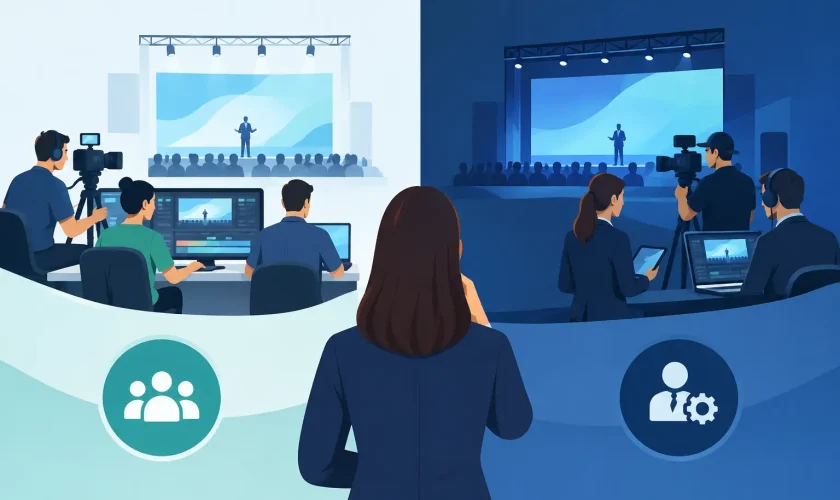

A keynote lands. The room reacts. A sponsor installation draws a crowd. By the next morning, your leadership team wants proof the event delivered. That is where photography versus video coverage becomes a business decision, not a creative preference. Each format captures value differently, and the strongest event content plan gives both a defined job.
For corporate events, the question is rarely whether photography or video is better. The real question is what your organization needs to show, share, and reuse after the doors close. Photos can move quickly through social channels, sales decks, media recaps, and sponsor reports. Video brings energy, voice, scale, and story to the moments still worth watching months later.
Photography Versus Video Coverage: What Each Delivers
Event photography creates immediate, flexible proof. A strong image can show a packed general session, a meaningful executive interaction, a branded environment, or the detail behind an activation in a single frame. It is easy to publish, easy to organize, and useful across nearly every post-event channel.
For planners, speed matters. Priority selects can support live social posting, internal updates, press needs, and attendee communications while the event is still happening. A polished next-day gallery gives marketing teams usable assets before the momentum fades. Photography is also highly efficient for documenting high volume: speakers, attendees, sponsor touchpoints, breakout rooms, awards, signage, and candid moments across a large footprint.
Video captures what still images cannot: movement, sound, pacing, and emotional lift. A film can reveal the anticipation before a product launch, the applause after an announcement, the scale of an opening session, or a customer explaining why a solution matters. It gives future attendees a reason to register and gives stakeholders a more complete sense of the experience.
That difference matters when your objective is persuasion. A still photograph can establish credibility. A well-built event film can create a feeling. It can combine executive messaging, attendee reactions, event design, and brand presence into a story people understand in minutes.
Neither format replaces the other. Photography is the workhorse of an event content library. Video is the high-impact narrative asset that extends the experience beyond the venue.
Start With the Outcome, Not the Camera
Coverage decisions become clearer when they are tied to specific post-event uses. If your immediate priority is recapping the event on social media, recognizing sponsors, updating a press room, and filling a content library, photography needs substantial attention. If you are launching a campaign, selling next year’s conference, recruiting talent, or presenting a major message to audiences who were not in the room, video should be planned from the start.
Most large events require both, but not in equal measure. A three-day conference with dozens of sessions may need broad photography coverage and focused video capture around the keynote, executive interviews, sponsor activations, and hero moments. A product launch may place greater weight on a cinematic recap film, while still requiring a deep photo gallery for PR, retail partners, social teams, and internal communications.
The right balance depends on your audience, agenda, venue footprint, and distribution plan. It also depends on what must be captured once. A CEO’s opening remarks, a live reveal, a celebrity appearance, or a customer testimonial cannot be recreated after teardown. Those moments deserve dedicated planning, not an assumption that one crew member can cover everything at once.
The Hidden Risk of Treating Coverage as an Add-On
The most common event coverage problem is not poor equipment. It is unclear priorities. When photo and video teams receive a loose shot list just before doors open, they are forced to react to the schedule rather than work ahead of it. The result can be missed executive interactions, uneven sponsor coverage, generic crowd shots, or video that looks attractive but lacks a usable story.
A stronger approach begins before the event. Identify the required moments, the brand standards, the people who need to be featured, and the assets that must be delivered quickly. Review floor plans and show flow. Confirm where crews can move during key sessions. Align on which sponsor elements need clear visibility and which areas should feel candid rather than staged.
This planning is especially important when the event spans multiple rooms or days. One photographer cannot document a keynote, VIP arrival, breakout session, and off-site dinner at the same time. One videographer cannot record a presentation, capture audience reactions, collect testimonials, and build b-roll in separate areas without a realistic coverage plan.
Coverage should be staffed around simultaneous moments, not just attendee count. That is how teams protect the moments that matter most.
Use One Visual Standard Across Photo and Video
When photography and video are produced by separate vendors, inconsistency is easy to spot. The color treatment may differ. The visual emphasis may shift away from approved brand moments. One team may prioritize speakers while another focuses on décor, leaving the final asset library feeling disconnected.
A unified team creates a more intentional result. Photographers and videographers can work from the same creative brief, brand guidelines, run of show, and priority list. They know which executive should be featured, how sponsor marks should appear, which installation details are essential, and what tone the final content needs to carry.
That coordination also reduces the burden on the planner. Instead of translating the same priorities across multiple vendors, you have one coverage strategy and one production lead accountable for the full visual record. AXIA Event Media plans photo and video together so crews can cover the event without competing for the same moment or losing sight of the larger story.
Consistency does not mean every image and clip should look identical. Photography may favor a decisive expression or a clean brand composition. Video may need movement, reaction, and natural sound. The shared standard is not sameness. It is a clear visual point of view that feels like your event and your brand.
Plan Deliverables Around Timing
Fast delivery is not a finishing detail. It changes how useful event content becomes. A photo from opening day has greater value when it can support that afternoon’s social post or the next morning’s attendee email. A highlight film has more impact when it is ready while the event, product, or campaign is still top of mind.
Set delivery expectations before production begins. Decide whether you need same-day priority selects, next-day photography, a short recap during the event, or a completed film after final approvals. Be precise about who selects images, how feedback is handled, and where files will be organized. Large galleries become far more valuable when teams can search by day, session, speaker, sponsor, or experience zone.
Video timelines require special care. A cinematic recap is not simply a collection of clips. It requires story selection, editing, music, graphics, color work, and review. If a rapid turnaround is essential, the crew needs to capture with that deadline in mind and the approval path must be lean. If the film will support a larger campaign, give the edit room to be more deliberate.
Build a Content Library, Not a Folder of Files
The strongest event coverage continues working after the recap is posted. Photos become sales collateral, speaker promotion, recruiting materials, award submissions, sponsor reports, internal presentations, and next year’s marketing. Video can become a hero film, short social edits, testimonial clips, recruitment content, or segments for future launch campaigns.
That long-term value depends on range. Capture the wide shots that establish scale, but also secure close details, branded moments, human interactions, speaker portraits, audience reactions, and authentic evidence of participation. A room full of people matters. So does the exchange at a demo table that shows why they were there.
Ask one practical question during planning: will this asset still be useful if someone sees it six months from now? If the answer is no, it may still have a place in real-time social content. But your coverage plan should also produce evergreen material that supports the business long after event week.
A well-covered event does more than preserve a memory. It gives your team credible proof, compelling promotion, and a visual record ready for the next opportunity.