
A packed keynote room. A product reveal timed to the second. A sponsor activation drawing a line around the booth. These are the moments event technology is built to support – but only if the technology serves the experience instead of distracting from it.
For corporate marketers and event planners, the question is not whether an event needs more technology. It is whether every tool in the room helps the audience engage, gives the brand useful data, and creates content that can keep working after the ballroom is empty.
Event technology is part of the guest experience
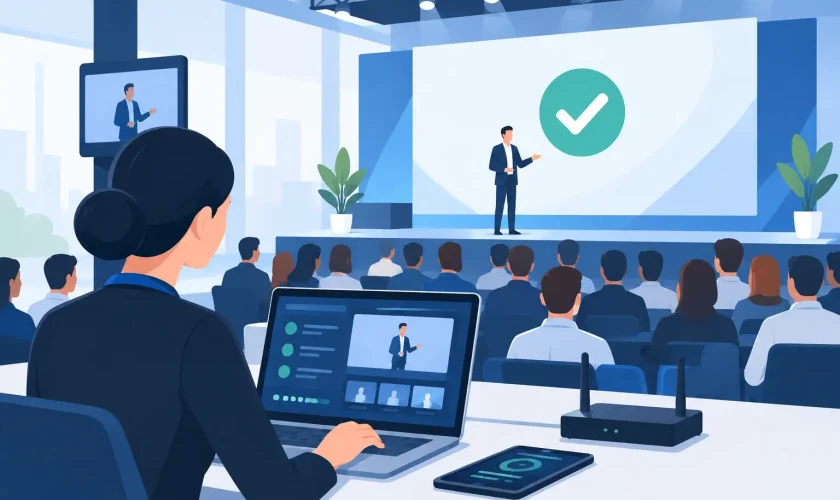
Event technology now touches nearly every stage of a conference, trade show, summit, or launch. Registration platforms move guests through check-in. Event apps shape schedules and networking. LED displays set the visual tone. Streaming platforms expand an audience beyond the venue. Interactive installations give attendees something to participate in, not just watch.
That can create a stronger event. It can also create friction.
A complicated app that nobody downloads does not improve networking. An interactive display with a long wait time can pull attention away from the message. A live stream with weak audio makes an otherwise polished program feel unprepared. The technology may be impressive on paper, but attendees judge it by one standard: did it make the experience better?
The strongest event plans start with that standard. Choose technology around the behavior you want to create. If the goal is more sponsor engagement, build a simple, visible interaction that produces a clear reason to stop. If the goal is audience participation during a general session, make the response process immediate and easy to understand. If the goal is broader reach, treat remote viewers as a real audience with a production plan designed for them.
Technology should feel considered, not piled on.
The missing connection: technology and content
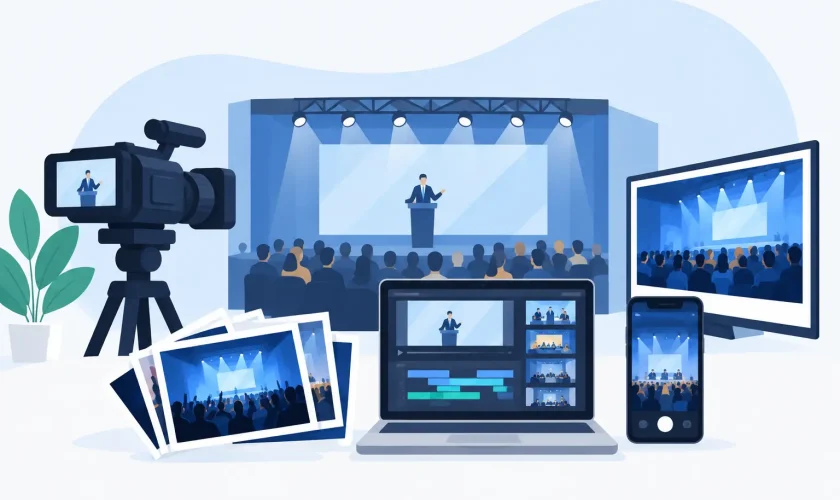
Most event technology conversations focus on the live experience. That matters, but it is only half the opportunity. Every screen, demo, immersive environment, data display, and audience reaction also creates a visual story.
This is where event coverage needs to be part of the planning conversation early. Your photo and video team should know which technology features matter most, when they will be active, what sponsor elements must be visible, and how the brand wants the experience to look in finished content.
A high-energy activation can be difficult to capture if the crew is not briefed on its timing, lighting, participant flow, or key interaction. A projected presentation may look strong in person but require a specific camera approach to avoid blown-out screens and dark faces. A large LED wall can make a room feel cinematic while creating exposure challenges for photography and video.
None of these are reasons to avoid ambitious production. They are reasons to plan it correctly.
When visual coverage is integrated with the event technology plan, the finished assets show more than equipment. They show people using it. They capture the anticipation before a reveal, the scale of the room, the energy around a sponsor experience, and the reaction that proves the investment landed.
Build for the room and for what comes next
A major event has two audiences: the people who attend and the people who will see the content later. That includes prospective attendees, future sponsors, customers, employees, executives, and social audiences who never entered the venue.
The live audience needs technology that is intuitive and reliable. The future audience needs content that explains why the event mattered.
That distinction changes how teams should plan. A branded photo moment may be designed for attendee sharing, but it can also provide a valuable backdrop for executive portraits, customer moments, and sponsor coverage. A product demo can be filmed as a concise social clip, a sales enablement asset, or part of a larger event recap. Session graphics can support a strong stage experience while giving editors clear visual structure for post-event films.
It depends on the goals. A leadership summit may prioritize executive messaging and internal culture. A trade show may need sponsor visibility, booth traffic, and a large volume of usable attendee imagery. A product launch may need tight control of the reveal, brand details, and audience response. The technology plan should reflect those priorities, and so should the shot plan.
Before the event, identify the moments that need to live beyond the room. Not every piece of programming needs equal coverage. A clear priority list protects the moments that matter most.
Fast delivery makes event technology more valuable
A digital experience loses momentum quickly if the supporting content arrives weeks later. The same is true for a keynote, a sponsor activation, or a product launch. Marketing teams need assets while attendees are still posting, while conversations are active, and while internal stakeholders are looking for proof that the event delivered.
Fast turnaround is not simply a production preference. It changes what the content can do.
Same-day priority selects can support social posts during the event. Next-day photography gives marketing teams polished images for recaps, sponsor follow-up, press materials, and internal communications. A well-edited highlight film can carry the emotional weight of the experience into registration campaigns and future sales conversations.
For that speed to work, the production workflow must be organized before doors open. The team needs access to the run of show, brand guidelines, key stakeholder contacts, sponsor commitments, and clear approval paths. They need to know whether certain images are needed first, whether executives require priority coverage, and how content will be delivered to the people who need it.
The technology can create the moment. An experienced event media team helps turn that moment into usable proof.
Avoid technology that creates more work for your team
Event planners already coordinate venues, speakers, vendors, schedules, travel, signage, and stakeholder expectations. Every added platform or production element should earn its place.
The risk is not technology itself. The risk is adding tools that create disconnected vendors, unclear ownership, and more decisions during show days. When registration, AV, activations, streaming, photography, and video all operate independently, small gaps become visible. A speaker enters early. A sponsor moment happens without notice. A lighting change affects coverage. A crucial piece of content is never captured because no one knew it was needed.
A single source of truth helps. Share a current run of show, venue map, sponsor list, brand guidelines, and content priorities with the teams responsible for bringing the experience to life. Establish who calls changes and who needs to know when a timing shift happens. Build in time for the media crew to walk the space, test key sightlines, and understand where technology will affect lighting, sound, and attendee movement.
This level of coordination does not make an event feel overproduced. It makes the experience feel controlled when the schedule changes, as it often does.
Measure more than clicks and scans
Event technology often comes with dashboards full of metrics: app opens, badge scans, poll responses, stream views, dwell time, and lead captures. Those numbers are useful, but they do not tell the full story.
Pair them with visual evidence and business outcomes. Did the sponsor activation attract sustained traffic? Did attendees understand and engage with the product demo? Did the general session create a moment people wanted to photograph and share? Did the experience generate content that can help sell next year’s event?
Photography and video bring context to the data. They show the crowd behind the scan count, the engagement behind the poll response, and the human reaction behind the campaign metric. That matters when reporting to executives, proving sponsor value, or making the case for a larger investment next year.
At AXIA Event Media, we see the strongest events treat visual coverage as part of the operating plan, not a final add-on. The result is a more complete record of what happened and a stronger library of content for what comes next.
The right technology should make the event more memorable in the room. The right content plan makes sure that memory keeps creating value long after teardown.