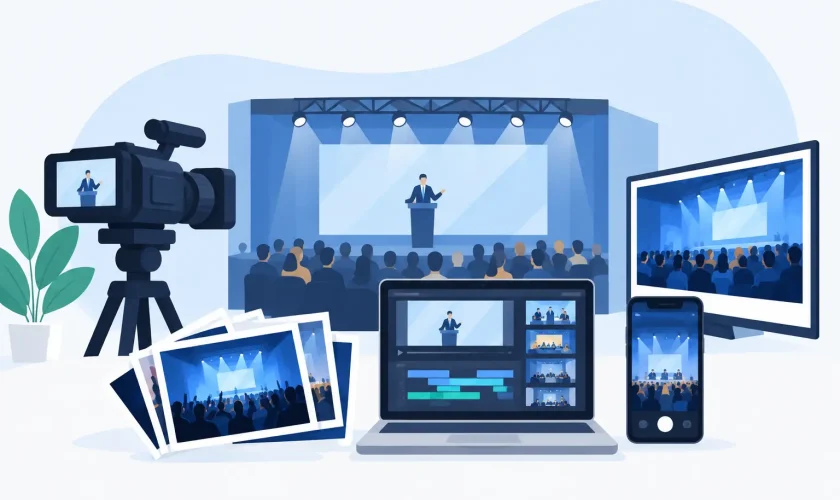

The final keynote ends, the ballroom clears, and your event team is already building next year’s registration campaign. That is why event content trends now matter far beyond a recap film or a folder of photos. The strongest events are planned as content engines from the start, with photo and video assets ready to support live social coverage, sponsor reporting, sales outreach, recruiting, and future promotion.
For corporate marketers and event planners, the shift is practical. Audiences expect timely updates. Sponsors expect visible proof of their investment. Internal stakeholders want polished assets while the event still feels current. A content plan that begins after the event is over cannot meet those expectations.
Event content trends are moving closer to the live moment
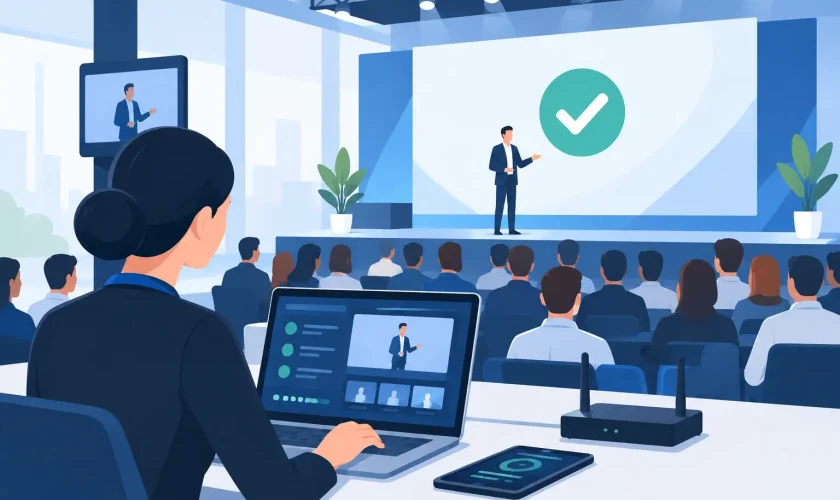
Fast delivery has become a baseline expectation, not a premium add-on. A well-composed speaker image delivered the next day can support a post-event recap. That same image delivered during a multi-day conference can promote the afternoon session, reinforce sponsor recognition, and give executives something worth sharing while attendance is still high.
This does not mean every asset should be edited in real time. Speed without standards creates inconsistent color, rushed framing, and content that does not match the brand. The better model is to define priority moments before doors open: keynote arrivals, sponsor activations, executive portraits, award winners, crowd energy, and major announcements. The production team then knows what requires same-day priority selects and what can move through a more complete post-event edit.
For video, short-form footage is increasingly planned alongside the cinematic event film. A vertical interview clip, a fast speaker quote, or an energetic activation montage can work during the event or immediately afterward. The longer recap film still has a place, especially for annual conferences and brand storytelling. It simply should not be the only deliverable.
The trade-off: speed needs a clear approval path
Fast delivery only works when someone can make decisions. If every image requires review from five departments, content will miss its moment. Assign one or two approvers, provide brand references in advance, and agree on where priority selects will be delivered. That small operational decision protects quality and keeps your team from chasing files in the middle of a busy show day.
One capture plan now has to serve multiple audiences
A corporate event is rarely speaking to one audience. Attendees want a record of the experience. Leadership wants evidence of participation and momentum. Sponsors want visibility. Prospective attendees want a reason to register next year. Sales teams may need proof points for conversations that have nothing to do with the event itself.
That makes intentional shot planning more valuable than simply increasing the number of cameras. Before the event, identify what each audience needs to see. For sponsors, that may mean branded signage, attendee interaction, product demonstrations, and wide shots that establish scale. For internal communications, it may mean leadership on stage, employee recognition, and candid collaboration. For future marketing, it may mean full rooms, expressive audience reactions, polished environmental details, and moments that make the experience feel worth attending.
The most useful content library includes both the hero moments and the connective tissue. A keynote photo may lead a campaign, but a sequence of registration, networking, signage, breakout discussions, and hospitality gives your marketing team far more flexibility over time. It also helps tell a credible story. A room packed with people is powerful, but it carries more meaning when the rest of the event experience is visible.
Sponsor-ready content is becoming a planned deliverable
Sponsors are investing in more than logo placement. They want measurable exposure and content they can use after the event. This is one of the event content trends with the clearest financial impact because stronger sponsor deliverables can improve renewal conversations and support higher-value packages in the future.
The key is specificity. “Sponsor coverage” is too broad to manage on-site. A sponsor-ready plan should identify the elements that matter: entrance branding, stage recognition, sponsored lounges, attendee engagement, speaking appearances, product interactions, and any hospitality moments tied to the partnership.
Not every sponsor needs the same volume of content. A title sponsor may require a broader visual story, while an activation partner may need focused proof that attendees engaged with its experience. Matching the coverage to the agreement prevents missed expectations and avoids collecting hundreds of generic photos that do not demonstrate value.
Video adds another layer. A short branded activation reel can give a sponsor a clean asset for its own channels, while event organizers retain footage that helps sell the activation concept next year. The permissions, logo treatment, and approval process should be settled before filming begins. Those details are easy to overlook and difficult to fix after the show floor is gone.
Vertical video is useful, but it should not dictate every decision
Vertical clips are built for mobile viewing, and their role in event coverage continues to grow. Speaker sound bites, attendee reactions, behind-the-scenes setup, and quick walkthroughs can perform well in a vertical format. They are immediate, human, and easy for internal teams to share.
But a vertical-first approach is not right for every event asset. A flagship brand film, executive interview, or wide stage reveal may require a horizontal frame. Some moments should be captured in both formats, particularly when there is enough crew coverage to do so without compromising the primary deliverable.
The decision should follow the distribution plan. If a video is intended for a registration landing page, a sales presentation, or a wide-format display, shoot accordingly. If it is meant for quick mobile consumption, vertical may be the better choice. Planning formats in advance avoids the common problem of trying to crop a horizontal frame into a vertical clip after the fact, only to lose the speaker, the branding, or the visual impact.
Authentic moments are outperforming overly staged coverage
Polished event visuals still matter. Corporate audiences expect clean compositions, flattering lighting, and content that reflects the quality of the experience. At the same time, marketers are moving away from galleries that feel entirely posed or detached from the room.
The content that tends to have the longest life shows real engagement: a speaker connecting with an audience, peers reacting to a point, a genuine conversation in a networking space, or a product demonstration that draws a crowd. These moments make an event feel active and credible.
That does not mean leaving everything to chance. Experienced event crews know how to anticipate reactions, find clean backgrounds, work around brand signage, and capture candids without disrupting the experience. The goal is not to make the event look accidental. It is to make it look alive.
Organized libraries are part of the deliverable
A gallery is only valuable if your team can find what it needs. As events generate more content across multiple rooms, days, and deliverable types, organization has become a major part of production quality.
Files should be structured in a way that supports real marketing work. That may include separate collections for keynotes, breakouts, sponsors, executive moments, activations, networking, and venue details. Clear naming, consistent edits, and a predictable delivery process reduce the time your team spends sorting through duplicates or searching for one image from a specific session.
For larger events, it is also worth discussing how content will be prioritized across the schedule. Simultaneous sessions create a coverage decision, not just a staffing question. The right team will help identify which rooms need full documentation, which moments need a short appearance, and where photo and video coverage should overlap. This is how planners avoid gaps without overproducing content that will never be used.
The best trend is still better pre-event planning
Technology, formats, and platforms will keep changing. The events that consistently produce useful content have something simpler in common: their coverage is planned before the first guest arrives.
A strong pre-event process aligns the run of show, brand guidelines, sponsor commitments, shot priorities, delivery timing, access requirements, and key decision-makers. It gives the photo and video team context, so they can work as one coordinated unit instead of two separate vendors competing for the same moment.
AXIA Event Media approaches this planning as part of the production, not paperwork before the production. When crews know the moments that matter most, they can capture them with intent and deliver content that serves the event long after the final session.
Your next event does not need more content for content’s sake. It needs the right moments, captured at the right standard, delivered when they can still create momentum. Plan for that outcome early, and every frame has a clearer job to do.